
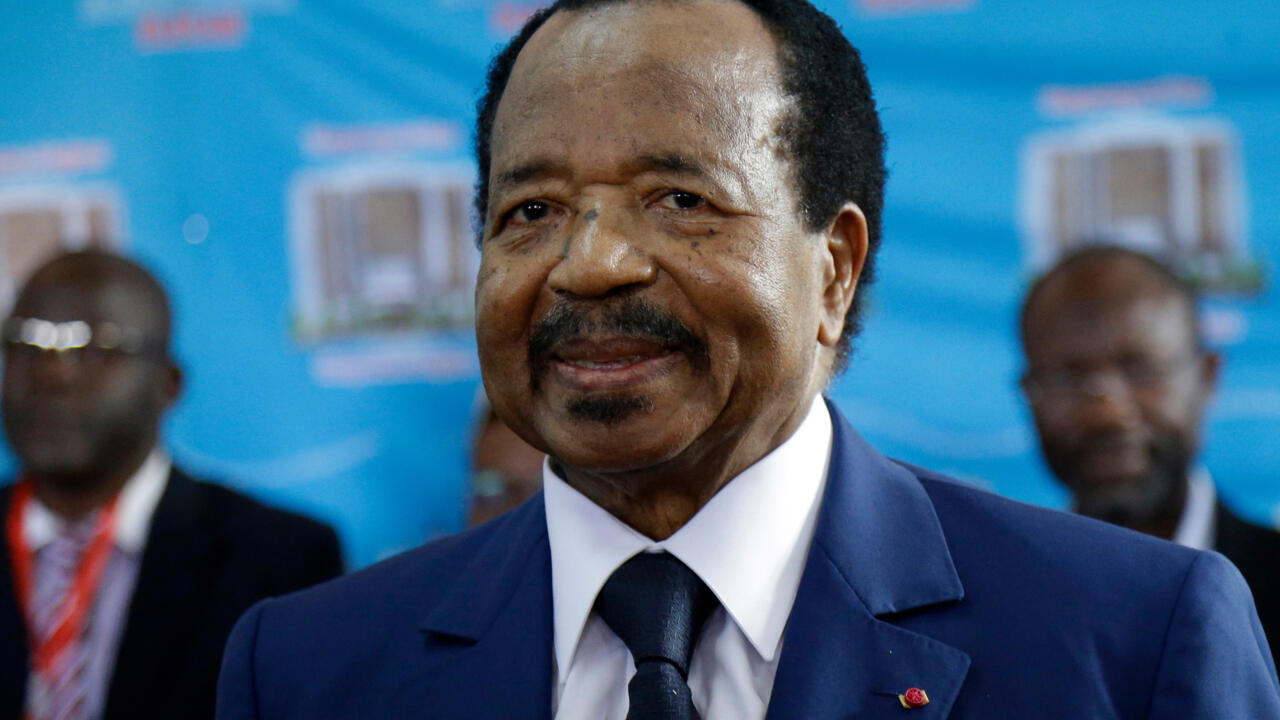
Cameroonian President Paul Biya returned to Yaoundé on Thursday, August 20, 2026, ending a 74-day stay in Geneva, Switzerland, that once again placed a spotlight on his health, leadership style, and the unusual nature of governance under Africa’s second-longest-serving president.
The 93-year-old leader, who has ruled Cameroon since 1982 and is the world’s oldest serving head of state, departed the country on June 7 for what the presidency described as a brief private visit to Europe. However, the trip extended for more than ten weeks, becoming one of the longest periods Biya has spent outside Cameroon during his four-decade rule.
His prolonged absence revived an old debate surrounding Biya’s leadership style: a president who frequently governs from abroad and has earned the nickname “the absentee president” among critics. For years, Biya has been known for spending extended periods in Europe, particularly Switzerland and France, while maintaining control of state affairs from a distance. These trips, often officially described as private stays, have repeatedly raised questions about transparency, decision-making, and the extent of his direct involvement in daily government operations.
Critics argue that Biya’s long stays abroad have become a defining feature of his presidency, creating uncertainty whenever he disappears from public view. Opposition figures have previously accused the government of operating on “autopilot” during his absences, especially when there are limited public updates about his health or official activities.
The latest 74-day absence intensified those concerns. With no public appearances during his stay in Geneva, speculation grew over his ability to govern, while opposition leaders questioned whether Cameroon had a clear mechanism for managing prolonged periods when the president is away or unable to perform his duties.
Despite being abroad, Biya continued to exercise presidential authority. During his absence, he issued executive decrees, including changes affecting senior military leadership and the elite Rapid Intervention Brigade (BIR), demonstrating that key state decisions remained centralized around the presidency.
Upon arriving at Yaoundé Nsimalen International Airport aboard a chartered flight alongside First Lady Chantal Biya, the president was welcomed by Prime Minister Joseph Dion Ngute and senior government officials. Supporters from his ruling Cameroon People’s Democratic Movement (CPDM) lined the streets leading to Unity Palace, celebrating his return. However, the arrival ceremony did not include a public address or press briefing, leaving questions over his health and future public engagements unanswered.
Biya’s pattern of extended overseas stays has long shaped perceptions of his presidency. While his supporters argue that he remains fully in charge and that modern communication allows him to govern regardless of location, critics say his frequent absences highlight concerns about an aging leadership system built around one individual.
The debate has become more significant as Cameroon faces questions over political succession. The country’s constitution provides that the President of the Senate would assume interim authority if the presidency becomes vacant. However, uncertainty remains over the transition process, particularly amid concerns about the absence of a clear succession roadmap after more than four decades of Biya’s rule.
As Biya resumes his duties in Yaoundé, his return may temporarily ease speculation, but the broader questions surrounding his leadership style, long periods abroad, and Cameroon’s future beyond the Biya era remain central issues in the country’s political conversation.