
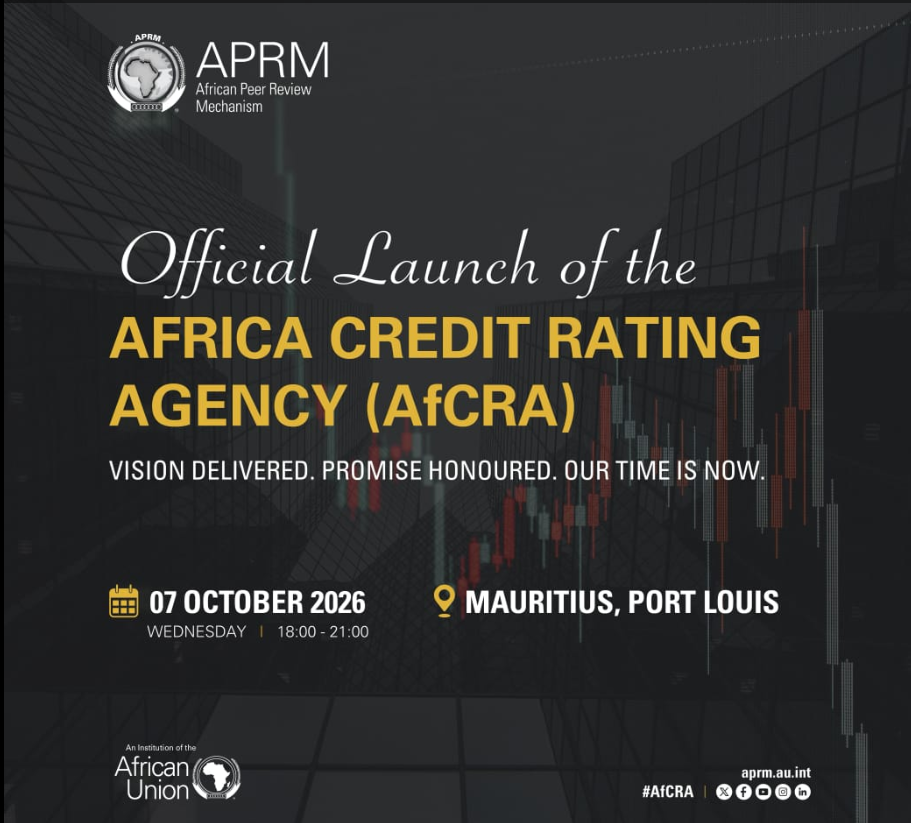
For decades, African governments have argued that international credit rating agencies — chiefly Moody's, S&P Global Ratings, and Fitch Ratings — have consistently misjudged the continent's risk profile, applying frameworks poorly calibrated to African economic realities. The consequence, policymakers say, has been a persistent and costly "risk premium." According to the AU, skewed risk perceptions have forced African nations to pay unfairly elevated borrowing costs on global capital for generations. The United Nations Development Programme estimates that some African governments face borrowing costs up to four times higher than comparable countries elsewhere, and that improved rating methodologies could shave 50 to 100 basis points off borrowing costs — savings worth as much as $5 billion a year across the continent.
That grievance has hardened in recent years. Countries including Ghana and Zambia have pointed to repeated downgrades as accelerants of their debt crises, arguing that ratings actions worsened the very conditions they were meant to flag. More recently, the African Peer Review Mechanism (APRM) — the AU body that developed AfCRA — openly criticized Fitch Ratings over its downgrade of the African Export-Import Bank (Afreximbank), alleging the assessment reflected a fundamental misreading of how African financial institutions actually operate. Fitch has defended its methodology as globally consistent and transparent, a rebuttal that underscores the deeper tension AfCRA is meant to address: whose standards, and whose understanding of context, should govern how African risk is priced.
What AfCRA Is Built to Do
AfCRA emerged from a multi-part initiative under the APRM, which over time evolved into several interlocking components: an information-exchange platform (now known as the regulators forum) that brings together governments and financial-sector institutions to improve credit-rating processes; technical support for countries navigating the rating process before, during, and after engagement with agencies; and ultimately, the establishment of an African-owned rating agency itself.
The agency is expected to issue sovereign and corporate credit ratings, with a particular early focus on local-currency debt instruments. Mauritius was selected as AfCRA's jurisdiction following a formal process conducted under APRM auspices, with Port Louis confirmed as headquarters as early as February 2026; other countries were invited to apply to host secondary offices.
Notably, AfCRA is not designed to be owned by African governments — a structural choice intended to insulate the agency from the perception, or reality, of political interference and to protect its credibility with international investors. Officials involved in the project, including APRM's Nkhalamba, have also been careful to frame AfCRA's mission as complementary rather than adversarial: the agency is not meant to compete head-to-head with Moody's, S&P, and Fitch, but to offer an alternative, context-driven assessment alongside them. Rony Lam, CEO of MCB Capital Markets, echoed this framing, describing AfCRA as a complement to — not a replacement for — the existing global rating architecture.
AfCRA is also tasked with a quieter but foundational mission: improving the underlying quality of Africa's financial information ecosystem. The APRM has identified uneven public statistics, limited transparency, and poor coordination among government agencies as structural weaknesses that feed negative risk perceptions independent of any rating agency's methodology. Part of AfCRA's mandate, therefore, is pushing African central banks, finance ministries, and securities exchanges toward more coherent, consistent data — the raw material any credible rating ultimately depends on.
It is worth noting that this launch has been a long time coming: AfCRA was originally slated to debut in September 2025 but was delayed, making the October 7, 2026 date the culmination of a longer institutional gestation.
The Case Made by the African Union
In the words the AU itself has used to frame the launch, the agency is "created to rewrite that narrative with context-driven credit opinions for sovereign and corporate entities." The Union has described AfCRA as "a bold assertion of African agency, financial sovereignty and institutional confidence," and situates the launch within a broader claim: that African economies have long been assessed within a global financial system not fully attuned to the continent's actual resilience and growth potential.
That sentiment was captured directly in the AU's own framing of the launch: the need for Africa to build financial institutions that understand its economies and can assess its risks properly. Crucially, the AU has been careful to define what it is not asking for. Africa is not seeking favourable ratings — it is seeking fair ratings, grounded in economic fundamentals and in the reforms African economies are actually undertaking. This distinction matters. AfCRA's founders are not proposing a rubber stamp or a nationalist alternative designed to flatter African sovereigns; they are proposing a different analytical lens, one that claims to better account for context, informal economic activity, regional integration dynamics, and reform trajectories that global agencies may underweight or overlook entirely.
The Trust Test Ahead
Launching AfCRA is, in many ways, the easy part. The harder task begins the moment the ribbon is cut: earning the confidence of global capital markets that have operated for decades on the assessments of the established "Big Three." That confidence, as the AU itself has acknowledged, will rest on two pillars — independence and rigour. An agency perceived as beholden to African governments, or as systematically generous in its assessments to please its constituency, would defeat its own purpose within months of launch. Investors, bondholders, and the institutions that price African sovereign debt will be watching closely for early signals: Will AfCRA issue unfavourable ratings when circumstances demand it? Will its methodology hold up to outside scrutiny? Will it operate with the same transparency it says has been lacking elsewhere?
The stakes extend beyond any single agency's reputation. If AfCRA succeeds in demonstrating rigorous, independent analysis, it could meaningfully lower borrowing costs across the continent and validate a broader push toward African-led financial institutions — a trend that includes growing regional integration efforts and instruments like the African Continental Free Trade Area. If it falters, or is perceived as compromised, it risks reinforcing the very skepticism about African institutional capacity that it was built to overturn.
Conclusion
The October 7 launch in Port Louis is unlikely to immediately reshape how global capital prices African risk. Rating agencies build credibility over years, not on inauguration day. But AfCRA's creation marks a significant institutional milestone in a decades-long argument between African governments and the global financial establishment over who gets to define, measure, and price risk on the continent. Whether AfCRA becomes a genuine counterweight to the Big Three or a well-intentioned initiative that struggles for market relevance will depend entirely on what happens after the launch: the rigour of its first ratings, its willingness to deliver unwelcome verdicts when warranted, and its ability to convince skeptical investors that "African-owned" does not mean "African-biased." The agency's founders appear to understand this. The real test of AfCRA begins not on October 7, but in the months and years that follow it.