
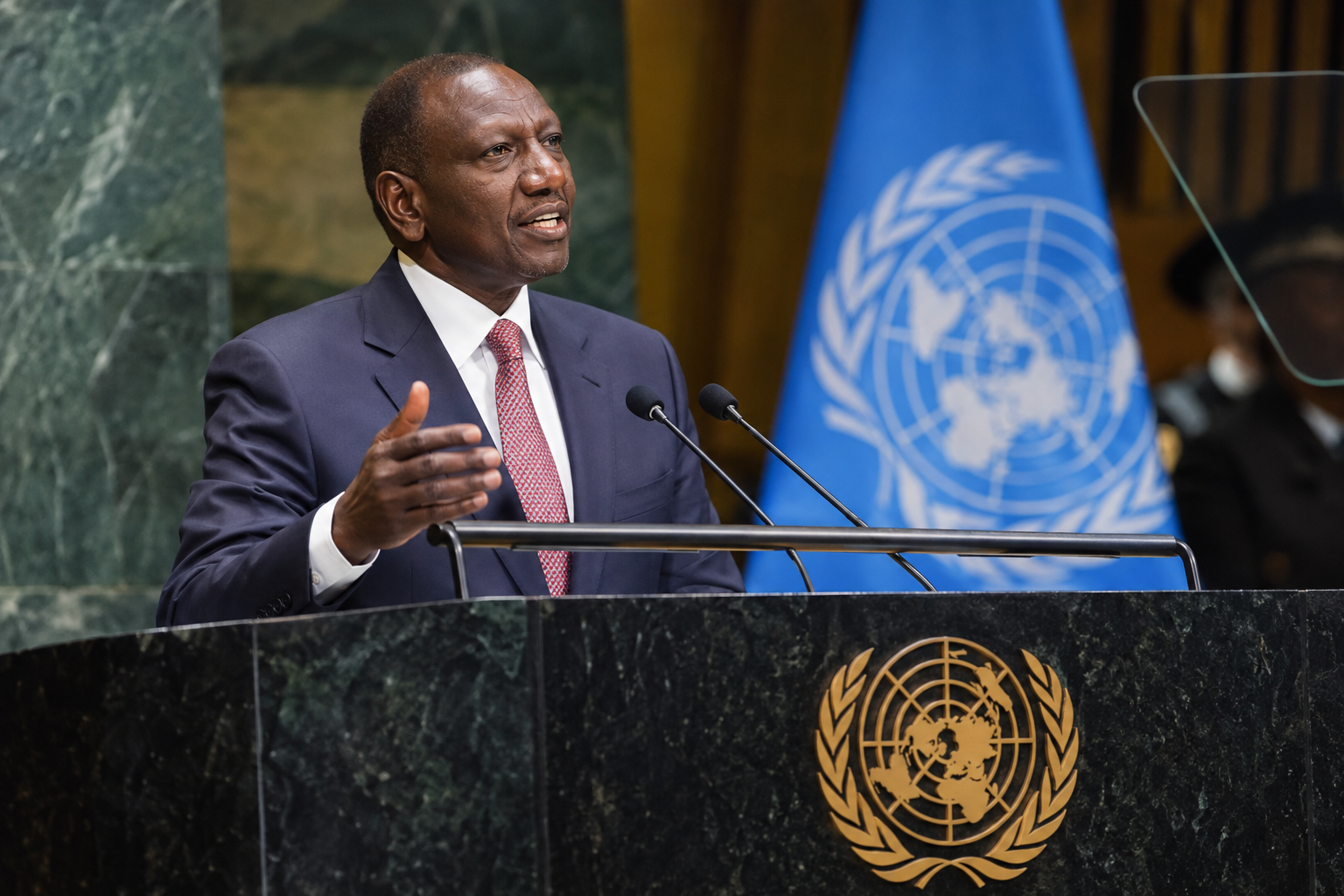
NEW YORK — President William Ruto has renewed calls for sweeping reforms to the United Nations Security Council, urging world leaders to grant Africa permanent representation and overhaul the global financial system to better serve developing economies.
Addressing the United Nations General Assembly in New York, Ruto said Africa's continued exclusion from the Security Council's permanent membership undermines the credibility and legitimacy of the international rules-based order.
"Institutions that do not reflect the people whose cooperation they require will eventually struggle to command their trust," Ruto told delegates.
Africa, home to 54 UN member states and more than 1.4 billion people, has no permanent seat on the 15-member Security Council despite the continent featuring prominently on the Council's agenda through peacekeeping missions, conflict prevention and peacebuilding efforts.
Ruto argued that meaningful reform is needed to ensure global institutions reflect today's geopolitical realities rather than the balance of power established after the Second World War.
His position aligns with the African Union's Ezulwini Consensus, which calls for at least two permanent African seats on the Security Council, with full veto powers if the veto system is retained, in addition to more non-permanent seats.
United Nations Secretary-General António Guterres also reiterated his support for permanent African representation on the Council.
In a post on his official X account, Guterres said:
"Africa still has no permanent seat on the Security Council. A 21st century Security Council without permanent African representation is unjust & indefensible. We must reform the Council so that it reflects today's world with the legitimacy and effectiveness that today's challenges demand."
His remarks add to growing international calls to reform the Security Council so that it better reflects current global political realities and strengthens the legitimacy of the UN's principal body responsible for maintaining international peace and security.
Reforming the Global Financial Architecture
Beyond Security Council reform, Ruto urged changes to the international financial architecture, saying developing countries continue to shoulder unsustainable debt burdens that limit investment in essential public services.
He said high debt-servicing costs and expensive borrowing divert resources away from healthcare, education, infrastructure and climate resilience in many low- and middle-income countries.
The Kenyan leader called for reforms to multilateral lending institutions and international credit rating systems, arguing that existing frameworks increase borrowing costs for developing economies and deepen global inequalities.
Challenges to Security Council Reform
Despite growing momentum for reform, changing the composition of the Security Council remains a difficult process.
Under Article 108 of the UN Charter, any amendment must be approved by a two-thirds majority of the General Assembly and ratified by all five permanent members of the Security Council — China, France, Russia, the United Kingdom and the United States — each of which holds veto power.
Although several countries have expressed support for expanding Africa's permanent representation, many African governments have opposed proposals that would create permanent seats without veto powers, arguing that such arrangements would institutionalize unequal classes of permanent membership.
Another unresolved issue is which African countries would occupy any future permanent seats, a decision that would require consensus among African Union member states.
Ruto said reforming global governance institutions is essential to ensure they remain representative, effective and responsive to contemporary challenges, including peace and security, sustainable development and equitable economic growth.
The renewed push comes amid increasing calls from developing countries for international institutions created in the aftermath of World War II to be modernized to reflect the political, economic and demographic realities of the 21st century. African leaders have consistently argued that greater representation in global decision-making is essential to strengthening multilateralism and addressing the continent's growing role in international peace and security.