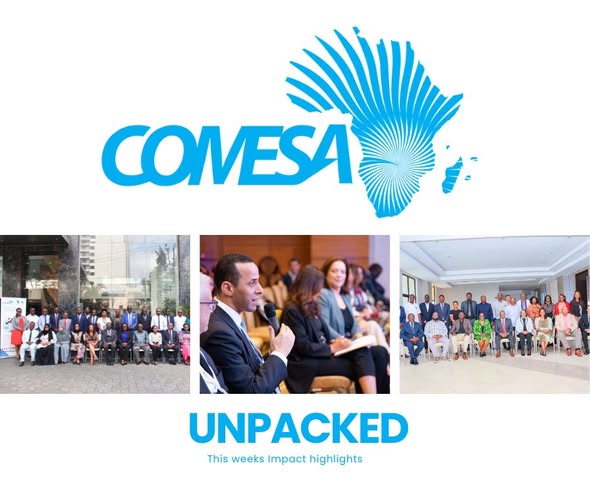
Approved by COMESA Ministers of Health in 2025, the HPTsC is now operationalised as a dedicated technical platform to strengthen coordination among Member States on critical health priorities such as :
Pharmaceutical manufacturing and
local production capacity
Harmonisation of medicines regulation
Pharmacovigilance and patient safety
systems
Access to quality-assured health
products and technologies
In just two days, Member States and regional partners, African Medicines Agency, AUDA-NEPAD, and SADC reviewed governance arrangements, Terms of Reference, and strategic priorities to guide effective implementation.
What this means in practice:
This initiative is not just policy development, it is a coordinated effort to ensure that health products across the region are safer, more accessible, better regulated, and more efficiently distributed.
Why this matters:
This means stronger health systems, improved access to essential medicines, reduced dependency on external supply chains, and greater regional health security.
Through the re-establishment of the HPTsC, COMESA Member States are translating commitment into action and strengthening collaboration to deliver safer, more reliable, and more resilient health systems for the region.
#COMESAHealth #RegionalIntegration #MedicinesRegulation #PharmaceuticalManufacturing #AUDANEPAD #AMA #SADC
𝗖𝗢𝗠𝗘𝗦𝗔’𝘀 𝗧𝗿𝗮𝗱𝗲 𝗙𝗮𝗰𝗶𝗹𝗶𝘁𝗮𝘁𝗶𝗼𝗻 𝗶𝗻 𝗔𝗰𝘁𝗶𝗼𝗻 𝘁𝗼 𝗥𝗲𝗱𝘂𝗰𝗲 𝗙𝗼𝗼𝗱 𝗟𝗼𝘀𝘀 𝗮𝗻𝗱 𝗘𝘅𝗽𝗮𝗻𝗱 𝗙𝗼𝗼𝗱 𝗔𝗰𝗰𝗲𝘀𝘀.
Food loss and waste remain one of the most urgent barriers to food security across Africa and the Middle East and COMESA is actively advancing solutions. The FoodGuard Global Summit held in Cairo, Egypt (2–4 June 2026), convened by UNIDO in partnership with Informa Markets, together with global leaders is committed to transforming food systems.
As an official High-level panelist, COMESA Assistant Secretary General – Programmes, Ambassador Dr. Mohamed Kadah, contributed to discussions on strengthening regional food security through reduced food loss and waste. He emphasized COMESA’s practical, systems-based interventions are already actively making trade more efficient and reducing losses along cross-border value chains, including:
Harmonised SPS Regulations
Simplified Trade Regime supporting
small-scale cross-border trade
Mutual Recognition Agreements for
standards
Digital Certificates of Origin and
SPS systems
This will reduce border delays, streamline inspections, facilitate the movement of perishable goods, and strengthen regional market integration.
A key innovation showcased was the Regional Food Balance Sheet (RFBS), developed in partnership with AGRA. The platform enables real-time tracking of food surpluses and deficits, supporting faster, data-driven food redistribution and more informed decision-making across the region.
COMESA also presented the upcoming African Trade Competitiveness and Market Access Programme (ATCMAP), designed to strengthen SMEs, expand agro-processing, and unlock new regional and global market opportunities. On the sidelines, COMESAand Informa Markets strategically accelerated investment, agro-processing, and export development across the region.
Through trade facilitation COMESA is
translating regional cooperation into practical solutions to strengthen food
security, reduce food loss, and expand market access across Africa.
#COMESA #FoodSecurity #TradeFacilitation #AgroProcessing #AfricaRising #InnovationInTrade
𝗖𝗢𝗠𝗘𝗦𝗔 𝗦𝘁𝗿𝗲𝗻𝗴𝘁𝗵𝗲𝗻𝘀 𝗘𝗹𝗲𝗰𝘁𝗼𝗿𝗮𝗹 𝗜𝗻𝘀𝘁𝗶𝘁𝘂𝘁𝗶𝗼𝗻𝘀 𝗳𝗼𝗿 𝗠𝗼𝗿𝗲 𝗖𝗿𝗲𝗱𝗶𝗯𝗹𝗲 𝗮𝗻𝗱 𝗥𝗲𝘀𝗶𝗹𝗶𝗲𝗻𝘁 𝗗𝗲𝗺𝗼𝗰𝗿𝗮𝗰𝗶𝗲𝘀.
COMESA in partnership with EISA, the Clingendael Institute, and the African Union, convened a high-level capacity-building programme for EMB leaders from Kenya, Malawi, Seychelles, and Uganda, to support the strengthening of Election Management Bodies (EMBs) across its Member States as part of its commitment to promoting democracy, good governance, and the rule of law.
From 10–12 June 2026 in Machakos, Kenya, COMESA, together with Chairpersons, Commissioners, Directors, and senior electoral officials with the goal to enhance institutional capacity and address emerging governance and technological challenges affecting electoral processes through the following key focus areas:
Electoral governance and
institutional resilience
Managing misinformation,
disinformation, and malinformation
The implications of Artificial
Intelligence for elections
Strengthening transparency,
credibility, and public confidence in electoral processes
Through interactive peer learning, experience sharing, practical case studies, and regional best practices, participants have been equipped with tools from both regional experiences and their own institutional contexts. They also identified priority areas for continued capacity strengthening, including crisis communication, cybersecurity, stakeholder engagement, youth-focused communication strategies, voter education, corporate governance, and confidence-building measures.
Strong Election Management Bodies are
critical to safeguarding democracy. COMESA’s ongoing investment in
institutional capacity and regional cooperation is delivering stronger
electoral integrity and greater public trust in democratic processes across the
region.
#COMESA #Democracy #GoodGovernance #RuleOfLaw #ElectoralIntegrity #CapacityBuilding #RegionalIntegration